Beach safety, plainly
The Gulf is warm, shallow, and usually gentle — but it has real hazards, and the flag system is how the city tells you which day you are having. Please read this before your first beach morning.
The flag system
Panama City Beach flies warning flags at every public beach access, including the one closest to the house. Check them every single time you go down — conditions change through the day, and the Gulf can look deceptively calm under a red flag.
| Flag | Means | What to do |
|---|---|---|
| Green | Low hazard | Calm conditions. Still watch children closely. |
| Yellow | Medium hazard | Moderate surf or currents. Weaker swimmers should stay close in. |
| Red | High hazard | High surf or strong currents. Swimming is not advised. |
| Double Red | Water closed | The Gulf is closed to the public. Entering is against city ordinance — fines can reach $500 and refusing to leave can mean arrest. |
| Purple | Dangerous marine life | Flown with another flag. Usually jellyfish or stingrays. |
Rip currents
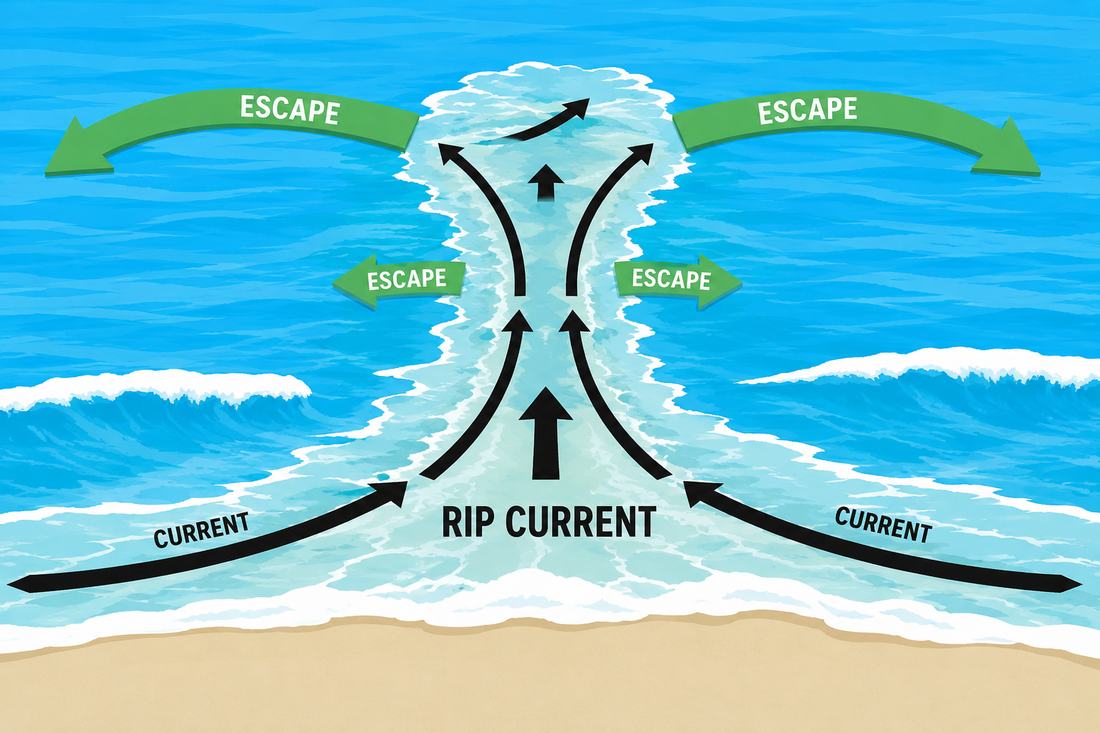
Rip currents are the real danger on this coast — narrow channels of water flowing away from shore, and they are what most Gulf drownings come down to. They can form on calm-looking days.
If you are caught in one: do not fight it and do not swim straight back toward the beach. Stay calm, float, and swim parallel to the shore until you are out of the pull, then angle back in. If you cannot break free, tread water, wave, and shout for help.
If someone else is caught: do not swim out after them. Get a lifeguard, call 911, and throw them something that floats. Would-be rescuers drown here more often than the people they went in for.
Swimming with children
Children must be with a parent or guardian throughout your stay — that is a house rule as well as common sense on this coast. In the water, pick one adult to be the designated water watcher, hand the job off deliberately when you swap, and keep that person off their phone. Most incidents happen when everyone assumes someone else is watching.
Lifeguard coverage in Panama City Beach is seasonal and limited to certain stretches, so do not assume the beach you are on is guarded. The sheltered lagoon side of the jetties at St. Andrews State Park is the calmest water in the area and the best choice for small children.
Alcohol and the water
Alcohol is a factor in a large share of drownings, and the combination of sun, heat, and the Gulf catches people out. If you have been drinking, stay out of the water. Panama City Beach also restricts alcohol on the sandy beach at certain times of year — notably during March — so check current city rules before you pack a cooler.
Marine life
A purple flag means jellyfish or stingrays have been spotted. Neither is usually serious, but both are avoidable: shuffle your feet as you wade out rather than stepping down, and stingrays will move off before you ever touch one. If you are stung by a jellyfish, rinse with vinegar or salt water — not fresh water — and see a lifeguard or clinic if the reaction spreads.
Sea turtles
Loggerheads and other sea turtles nest along this stretch from roughly May through October. Three things matter during nesting season: fill in any holes you dig before you leave, take everything off the sand overnight — chairs and tents left out block nesting females and trap hatchlings — and keep lights off the beach after dark. Artificial light sends hatchlings inland instead of out to the water. Nests are marked and staked; give them room.
Sun and heat
The sand here is white quartz and reflects sunlight straight back up at you, so people burn faster than they expect — including on overcast days. Reef-safe sunscreen reapplied every couple of hours, shade in the middle of the day, and more water than feels necessary. Florida heat indexes in July and August climb well past what most visitors are used to.
Storms and hurricane season
Atlantic hurricane season runs June 1 through November 30, and this is a coastal Florida property. Most trips are unaffected, but two things are worth knowing.
Thunderstorms: summer storms build fast in the afternoon. Get out of the water and off the sand at the first thunder — lightning strikes the open beach, and being the tallest thing on it is a bad position.
Evacuations: if Bay County, the City of Panama City Beach, or the State of Florida issues a mandatory evacuation order, you are required by law to comply and must leave the property immediately. We will help however we can, but we cannot waive an evacuation order. For this reason we strongly recommend travel insurance that covers weather interruptions for any trip booked during hurricane season.
Good habits
Swim near a lifeguard where one is posted. Never swim alone, and never at night. Glass is not allowed on the beach. Keep clear of the jetties and piers, where currents run hardest and fishing lines are in the water. And if you are on the water in a boat or kayak, watch the pass at St. Andrews — the current there is strong and the boat traffic is constant.
In an emergency
Call 911 first — then message us. When you call from the beach, tell the dispatcher the numbered beach access you are nearest to; that is how Panama City Beach emergency responders locate people on the sand, and it is far faster than describing landmarks. The access closest to the house is Public Access 36.
Beach conditions and current flag status are posted at every public access and updated by the city daily.
Thinking of coming?
Palmeras Marinas is a brand-new 3-bedroom townhome in Panama City Beach — sleeps 10, beach gear included, and a short walk to the sand.
Check Availability